Choose an errand you already need to do. Mine is usually returning a book. On the way there, identify three stops: the destination, a place where you pause without planning to, and somewhere you would like to revisit. Keep the walk comfortably within your own abilities and the conditions of the day.
For a sample route near my home, the destination was the library. The unplanned pause happened at a corner where a tree cast a moving pattern across a low wall. My return place was a small public square with a bench facing away from traffic. None of these needed a dramatic landmark to earn a place on the page.
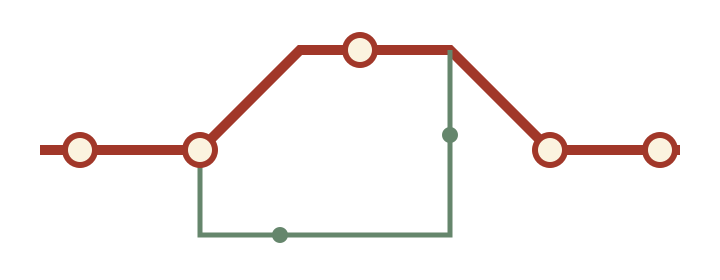
Back at the table, draw three circles before you draw any streets. Give each circle a word that describes its role: borrow, notice, return. Connect them in the order you encountered them. Only add a street or a turn when it helps explain the experience. The result may resemble a transit diagram more than a conventional map.
Write one sentence under each stop. Include a concrete detail you could recognize again, such as a broad stone step or the sound of leaves against a railing. After a week, repeat the journey and compare the notes. A personal atlas becomes richer when it records changes instead of trying to freeze a neighborhood in place.
| Stop | What stayed with me |
|---|---|
| Borrow | The cool entrance hall after a warm walk. |
| Notice | Leaf shadows moving faster than I expected. |
| Return | A bench with space to set down a notebook. |